A Professional's Take on the New Dell S3225Qc
The Dell S3225Qc positions itself as a versatile 32-inch curved monitor aimed at professionals who need a balance of screen real estate, color performance, and modern connectivity. This review examines how the display performs for common real-world use cases — content creation, office productivity, light photo/video editing, and mixed home/office setups — and explains what buyers typically care about when choosing a monitor in this class. The analysis is based on practical considerations: image quality, ergonomics, connectivity, color fidelity, and value for money.
Introduction
Large curved monitors have moved beyond niche gaming setups and into mainstream professional environments. The S3225Qc follows that trend by offering a single-monitor workspace that aims to replace multi-monitor desks for many users. The appeal is simple: a sizable, gently curved surface can provide immersive visuals and reduce head movement while keeping productivity workflows streamlined. What matters most to professionals, however, is not just size or curve but how the monitor handles color-critical work, multitasking, and day-to-day comfort.
Product overview and positioning
The S3225Qc sits in Dell's lineup as a 32‑inch class curved display intended for users who want a premium office and creative experience without stepping into ultra-high-refresh gaming territory. Dell emphasizes practical features: a large, high-resolution panel, broad connectivity, and a design that integrates into a tidy desktop setup. For buyers comparing options, the S3225Qc is best considered alongside other 32-inch 4K-class monitors that prioritize contrast and visual immersion over ultra-high refresh rates.
Detailed review and analysis
Design and build quality
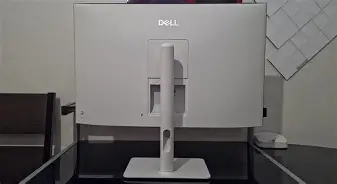
Physically, the S3225Qc presents a restrained, professional aesthetic. The stand and bezel treatment favor simplicity and sturdiness, avoiding flashy design cues that would detract from a corporate or studio environment. The curvature is gentle rather than aggressive, helping to create an immersive field of view without making the panel feel like a wraparound display. For users who value cable management, the monitor includes routing options that help keep the desk tidy.
Ergonomics are a common buyer concern. The monitor supports practical adjustments — tilt and swivel are typically present on displays in this segment, and the unit is compatible with standard VESA mounts if a different arm or stand is preferred. This flexibility accommodates sit/stand desks and multi-position workflows, which is especially important for professionals who shift between focused creative work and collaborative meetings throughout the day.
Display performance: color, contrast, and uniformity
The S3225Qc uses a VA-type panel, which naturally favors strong contrast and deep blacks compared with IPS alternatives. This strength is valuable for users who work with mixed content — spreadsheets and documents alongside photos and videos — because dark UI elements and shadow detail appear richer. For photographers and videographers, contrast helps during grading to better perceive subtle tonal shifts in darker areas.
Color accuracy out of the box tends to be good for a monitor in this class, but professionals who demand strict color management should plan for calibration. The monitor generally covers a generous portion of common color spaces used in web and video work, and its color uniformity across the panel is reasonable for screens of this size. That said, VA panels can exhibit slight shifts in color when viewed from extreme angles, a trade-off to keep in mind for multi-seat collaborative environments where viewers are not directly in front of the screen.
Resolution, scaling, and workspace
At roughly 32 inches with a high pixel count, the S3225Qc delivers a dense workspace suitable for side-by-side windows, detailed timelines in video editing software, and large spreadsheets. Users who are accustomed to 27-inch QHD displays will find the additional screen area noticeably helpful for multitasking. Windows scaling is a practical consideration: at 4K resolution on 32 inches, many professionals prefer 125–150% UI scaling to maintain readable interfaces while preserving workspace clarity.
Find top-rated Laptops & Computers products at great prices.
See Deals →Connectivity and productivity features
Modern professionals expect flexible connectivity, and the S3225Qc addresses this with multiple input options. Standard ports cover DisplayPort and HDMI, and the monitor typically includes a built-in USB hub that simplifies connecting peripherals. Some configurations may offer USB-C with single-cable convenience for compatible laptops; single-cable setups can simultaneously deliver video, data, and power — an advantage in clean desk environments and for laptop-first workers who want a simple dockless workflow.
Integrated features like an on-screen display with preset modes and picture-by-picture (PBP) or picture-in-picture (PIP) options enhance productivity. KVM functionality — when present — is valuable for users who share a keyboard and mouse across multiple connected systems without needing additional hardware.
Motion handling and refresh rate
The monitor emphasizes visual quality over high-refresh gaming, delivering a refresh rate typical for productivity‑focused displays. For general office work and video playback, the refresh characteristics are more than adequate. Gamers looking for high-frame-rate experiences will find better options elsewhere; those who occasionally game will still appreciate the large format but should not expect a gaming monitor’s low-latency competitive performance.
Audio and extras
Built-in speakers on monitors this size are convenient for casual use, online meetings, and video playback, but professionals who prioritize audio fidelity will prefer dedicated speakers or headphones for accurate sound. The S3225Qc’s speakers are functional and convenient but not a substitute for a dedicated audio setup in content production scenarios.
Real-world use cases
It helps to evaluate the S3225Qc by imagining specific professional workflows:
- Office productivity and multitasking: The wide workspace makes document comparison, large spreadsheets, and multiple simultaneous windows more comfortable, reducing the need for dual-monitor setups in many cases.
- Photo and casual video editing: For hobbyist and semi-professional creators, the monitor offers the resolution and contrast desirable for editing. Professionals doing color-critical work will still use a calibrated workflow with a reference monitor or a colorimeter.
- Software development and data analysis: Large code windows, terminal panes, and data visualizations benefit from high pixel density and wide vertical space. The curve subtly keeps peripheral content in the natural field of view.
- Hybrid work and presentations: Multiple inputs and PBP/PIP features facilitate switching between meeting content and local workstations, which is useful in small conference rooms or for remote presentations.
Pros & Cons
- Pros
- Large, immersive curved workspace that reduces head movement and aids multitasking
- Strong contrast and deep blacks from the VA panel, improving visual depth
- High resolution suitable for detailed content and side-by-side workflows
- Practical connectivity options and USB hub for simplified desk setups
- Solid build and professional design that fits office and studio environments
- Cons
- VA panel viewing angles can show slight color shifts compared with IPS alternatives
- Refresh rate and motion characteristics are not aimed at competitive gaming
- Out-of-the-box color accuracy may require calibration for critical color work
- Built-in speakers are serviceable but not a replacement for dedicated audio equipment
Comparison with nearby alternatives
For buyers deciding between similar 32-inch monitors, the differences usually boil down to panel type, ergonomics, and feature focus. The table below contrasts typical attributes to help prospective buyers weigh trade-offs.
| Model (category) | Panel type | Strengths | Best for |
|---|---|---|---|
| Dell S3225Qc | VA | High contrast, immersive curve, large workspace, good connectivity | Multitaskers, mixed creative/professional users, office environments |
| 32-inch IPS alternatives | IPS | Wider viewing angles, often better factory color accuracy | Color-critical designers, collaborative work where many viewers see the screen |
| Curved gaming monitors | VA / Fast VA / QLED | High refresh rates, adaptive sync, aggressive curvature | Competitive gamers and enthusiasts wanting immersive visuals at high FPS |
| Ergonomic-focused professional monitors | IPS / Mini-LED | Advanced ergonomics, factory calibration, enhanced HDR | Professionals needing precise color out of the box and flexible mounting |
Buying guide: what to check before purchasing
When evaluating a monitor like the S3225Qc, professionals should consider several key factors tailored to their workflows.
1. Panel type and viewing environment
Choose the panel type based on priorities: VA for contrast and deep blacks, IPS for color accuracy and wide viewing angles. If the workstation frequently has multiple viewers or requires color-critical collaboration, IPS may be preferable. For solo users who value contrast and more dramatic blacks, a VA panel like the S3225Qc can be an excellent fit.
Discover deals on Laptops & Computers — updated daily.
View Offers →2. Resolution and scaling
Make sure the operating system and applications used support effective scaling. 4K on 32 inches provides a lot of screen space, but some older applications may not scale well, leading to tiny UI elements. Users should test typical workflows or be prepared to adjust scaling settings for comfortable reading and interaction.
3. Color accuracy and calibration
Professionals in photography, design, or video should verify color coverage and calibration options. Even with good factory settings, a hardware colorimeter and calibration routine deliver the most reliable results. Check whether the monitor supports hardware LUTs or has companion software for simpler calibration workflows.
4. Connectivity and dockability
Consider how the monitor will integrate with existing hardware. Laptop users often benefit from USB-C single-cable setups that carry video, peripherals, and power. If present, USB-C can turn the monitor into a practical dock replacement. Otherwise, ensure there are enough display and USB ports to connect all necessary devices without additional hubs.
5. Ergonomics and mounting
Ensure the stand offers the tilt, height, and swivel adjustments needed for ergonomic comfort. If desk space or monitor arms are part of the setup, confirm VESA compatibility. The monitor’s curvature also interacts with desk depth — a gentle curve works well on typical desks, but an aggressive curve may be overwhelming for shallow desks.
6. Intended use and refresh rate
If the primary use is office productivity, content creation, or media consumption, a standard refresh rate is sufficient. For users who also value gaming performance, consider whether they can accept a compromise on refresh rate for better image quality or whether they should choose a dedicated gaming model instead.
Practical tips for setup and daily use
- Allow time for proper calibration: even modest calibration with a colorimeter will tighten color fidelity and make the monitor more reliable for content work.
- Adjust scaling early: set UI scaling to a comfortable level to avoid eye strain and inefficient workflows.
- Use PBP/PIP sparingly: picture-by-picture can be useful, but it reduces the effective size of each input — ideal only when showing two full workstations or during troubleshooting sessions.
- Position the monitor to minimize glare: the curved surface helps, but ambient lighting and window placement still affect perceived contrast.
Conclusion
The Dell S3225Qc is a thoughtfully targeted monitor that will appeal to many professionals seeking a large, immersive display for multitasking, media consumption, and general creative work. Its VA characteristics deliver strong contrast and an engaging image, while modern connectivity options make it suitable for clean, laptop-first workspaces. Buyers should weigh the trade-offs — particularly viewing-angle behavior and refresh-rate limitations — against their primary use cases. For those who prioritize a deep, comfortable workspace and contrasty image quality over absolute color-critical accuracy or gaming performance, the S3225Qc is a compelling choice that bridges the gap between productivity and visual immersion.