Don't Buy Until You Read This: Tcl Qm6K vs Hisense U6N Which Mini Led Tv Is Best
The mid-range television market has undergone a radical transformation over the last few years. Technologies that were once reserved for flagship displays costing thousands of dollars—specifically Mini-LED backlighting and high-refresh-rate panels—have trickled down into the sub-$1,000 price bracket. In 2024 and 2025, two of the most prominent contenders for the "budget king" crown are the TCL QM6K and the Hisense U6N. Both televisions promise impressive brightness, deep blacks, and modern gaming features, but they approach the balance of price versus performance in slightly different ways. For a buyer looking to upgrade their living room or gaming setup without breaking the bank, choosing between these two can be a daunting task involving technical jargon like local dimming zones, nits, and color gamuts.
The TCL QM6K and Hisense U6N represent the entry point into the Mini-LED ecosystem for their respective brands. Mini-LED technology is a significant step up from traditional LED backlighting because it uses thousands of tiny LEDs to illuminate the screen. This allows for much more precise control over which areas of the screen are bright and which are dark, effectively reducing the "blooming" effect where light bleeds into dark scenes. However, not all Mini-LED implementations are created equal. This article provides a comprehensive deep dive into the specifications, real-world performance, and long-term value of these two displays to determine which one deserves a spot in your home.
The Evolution of Mid-Range Mini-LEDs
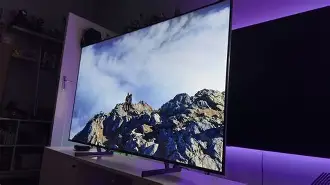
To understand where these TVs sit, one must look at the hierarchy of the brands. For TCL, the QM6K series (often associated with the QM7 line in various regions) serves as the bridge between standard QLED sets and the high-end QM8 series. It aims to offer high peak brightness and a robust gaming suite. On the other side, the Hisense U6N is the entry-level member of the "U" series Mini-LED family, sitting below the U7N and U8N. Historically, the U6 series has focused on value, often sacrificing high refresh rates to keep the price as low as possible while still offering the contrast benefits of Mini-LEDs. This fundamental difference in philosophy—TCL leaning toward performance and Hisense leaning toward absolute value—is the primary driver of the comparison.
In-Depth Review: The TCL QM6K Series
The TCL QM6K is designed to be a high-performance all-rounder. One of its most notable upgrades over previous generations is the inclusion of a High-Bright Ultra LED panel. This allows the TV to achieve a peak brightness that often exceeds 1,500 nits in certain HDR scenarios. For a mid-range television, this is a remarkable feat, as it ensures that HDR highlights like sunlight reflecting off water or flashes of neon light have the "pop" that viewers expect from modern content. The QM6K utilizes a Quantum Dot layer to enhance color volume, resulting in vibrant, saturated reds and greens that often rival much more expensive OLED displays.
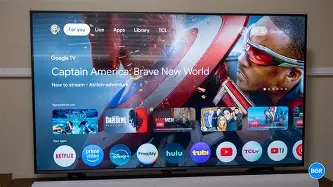
For gamers, the QM6K is particularly compelling. It features a native 144Hz refresh rate, which is a significant advantage over standard 60Hz or even 120Hz panels. When paired with a modern gaming PC or a current-generation console, the motion clarity is exceptional. It also supports AMD FreeSync Premium Pro, which eliminates screen tearing during high-intensity gameplay. The TCL interface, usually powered by Google TV, is snappy and intuitive, providing access to every major streaming platform with a focus on personalized recommendations. The physical design is modern, with thin bezels and a sturdy stand that allows for easy placement of a soundbar underneath.
Pros of the TCL QM6K
- Impressive peak brightness that handles bright rooms with ease and makes HDR content shine.
- Smooth 144Hz refresh rate, making it an ideal choice for serious competitive gaming.
- Excellent color accuracy out of the box with the Quantum Dot (QLED) enhancement.
- Robust local dimming performance that minimizes blooming around white text on dark backgrounds.
- Google TV integration offers a smooth, well-supported smart TV experience.
Cons of the TCL QM6K
- Slightly higher price point compared to the ultra-budget U6N models.
- Viewing angles are somewhat limited, typical of VA-style panels used to achieve high contrast.
- Built-in speakers are functional but lack the low-end punch required for a cinematic experience.
In-Depth Review: The Hisense U6N Series
The Hisense U6N is a masterclass in compromise. Hisense has managed to include Mini-LED technology at a price point where most competitors are still using basic edge-lit or direct-lit LED arrays. While it does not reach the blinding brightness levels of the TCL QM6K, it still offers a significant improvement over standard displays. The U6N typically peaks around 500 to 600 nits. While this may sound low compared to the TCL, it is more than enough for a moderately lit room and provides a respectable HDR experience for casual viewers. The inclusion of the Hi-View Engine processor helps with upscaling lower-resolution content, making older DVDs or 720p cable signals look remarkably clean on a 4K screen.
The main trade-off with the U6N is the refresh rate. It is capped at 60Hz, which means it cannot take full advantage of the high frame rate modes on the PlayStation 5 or Xbox Series X. However, for the average movie watcher or someone who plays slower-paced RPGs, this is rarely a dealbreaker. The U6N also uses Google TV, providing a consistent smart experience across brands. What sets the U6N apart is its contrast. Despite the lower brightness, the Mini-LED backlighting allows for deep, inky blacks that are far superior to the greyish "blacks" found on entry-level sets. This makes it an excellent choice for a bedroom TV or a dedicated dark-room movie environment where extreme brightness isn't necessary.
Pros of the Hisense U6N
- Incredible value for money, bringing Mini-LED technology to a much wider audience.
- Solid contrast and black level performance for its price bracket.
- Excellent upscaling of non-4K content, keeping older shows looking sharp.
- Supports all major HDR formats, including Dolby Vision and HDR10+.
- Simple, functional design that fits into any decor without being distracting.
Cons of the Hisense U6N
- 60Hz refresh rate is a significant limitation for enthusiasts and competitive gamers.
- Lower peak brightness makes it less suitable for rooms with significant natural sunlight.
- Motion handling can occasionally show slight blur in fast-moving sports compared to higher-end models.
Direct Comparison: TCL QM6K vs Hisense U6N
When placing these two side-by-side, the differences become stark. The TCL QM6K is clearly positioned as a "performance" mid-range TV, while the Hisense U6N is the "value" mid-range TV. If you were to watch a high-bitrate 4K HDR movie like Interstellar or Spider-Man: Across the Spider-Verse, the TCL would provide a much more visceral experience due to its ability to render brighter highlights. In a dark room, the gap narrows slightly, as both sets benefit from Mini-LED local dimming, but the TCL still holds the edge in shadow detail and color vibrancy.
Shop the latest Electronics picks on Amazon.
View Offers →Gaming is the area where the TCL QM6K completely runs away with the competition. The jump from 60Hz on the Hisense to 144Hz on the TCL is immediately noticeable. Inputs feel more responsive, and fast camera movements look significantly smoother. The TCL also features more HDMI 2.1 ports that support higher bandwidth, whereas the Hisense is more restricted in its connectivity. However, if your primary TV usage is watching the news, cooking shows, or streaming Netflix series in a dark bedroom, the extra hundreds of dollars spent on the TCL might not yield a proportional increase in enjoyment.
Technical Specifications Comparison
| Feature | TCL QM6K | Hisense U6N |
|---|---|---|
| Backlight Type | Mini-LED with Local Dimming | Mini-LED with Local Dimming |
| Peak Brightness | ~1,500+ Nits | ~500-600 Nits |
| Refresh Rate | 144Hz (Native) | 60Hz (Native) |
| Color Technology | QLED (Quantum Dot) | QLED (Quantum Dot) | HDR Formats | Dolby Vision, HDR10+, HDR10, HLG | Dolby Vision, HDR10+, HDR10, HLG |
| Gaming Features | VRR, ALLM, FreeSync Premium Pro | ALLM, Basic VRR |
| Smart Platform | Google TV | Google TV |
Buying Guide: Which One Should You Choose?
Choosing the best TV depends heavily on your specific environment and what you plan to watch. Most buyers fall into one of three categories: the dedicated gamer, the cinematic movie-goer, or the casual everyday viewer. Below we explore how each TV fares in these real-world scenarios.
The Bright Room Scenario
If your television is going to be placed in a living room with large windows or plenty of overhead lighting, the TCL QM6K is the clear winner. To fight reflections and prevent the picture from looking "washed out," a TV needs high peak brightness. The TCL’s 1,500-nit capability allows it to remain punchy and visible even during the day. The Hisense U6N, while featuring a decent anti-reflective coating, simply doesn't produce enough light to overcome heavy glare, which might lead to squinting during darker scenes in daytime viewing.
The Budget-Conscious Bedroom Setup
For a secondary TV or a bedroom setup where you mostly watch content at night or with the lights dimmed, the Hisense U6N offers unbeatable value. In a dark room, our eyes are much more sensitive to contrast than absolute brightness. Because the U6N uses Mini-LEDs, its black levels are deep and satisfying. You are getting about 80% of the cinematic experience of the TCL for a significantly lower price. For watching late-night talk shows or streaming a Netflix drama before bed, the U6N is more than sufficient.
The Next-Gen Gaming Setup
If you own an Xbox Series X, a PlayStation 5, or a gaming PC, buying a 60Hz TV like the Hisense U6N is doing your hardware a disservice. The TCL QM6K is built for gaming. The 144Hz panel allows for ultra-smooth motion that is critical for shooters, racing games, and action titles. Furthermore, TCL’s "Game Master" menu provides real-time information about your frame rate and HDR status, giving you more control over your experience. The lower input lag on the QM6K also ensures that your button presses result in instantaneous action on the screen.
Understanding HDR Formats
Both televisions support Dolby Vision and HDR10+. This is important because different streaming services use different formats. Netflix and Disney+ heavily favor Dolby Vision, while Amazon Prime Video uses HDR10+. Having both ensures that no matter what service you use, you are seeing the content exactly as the director intended. However, because HDR relies on the difference between the brightest and darkest parts of the image, the TCL’s higher ceiling for brightness means it can display a wider "dynamic range" in practice, even if both support the same software standards.
Daily Use and Software Experience
Both TCL and Hisense have opted for the Google TV platform. For those unfamiliar, Google TV is currently one of the most robust smart home ecosystems. It allows you to use your voice via Google Assistant to find movies, control smart lights, or even check your front door camera if it's integrated with Google Home. The interface is clean and places a heavy emphasis on "Continue Watching" across different apps, so you don't have to go into Netflix, then Max, then Hulu to find your shows.
In terms of processing speed, the TCL QM6K feels slightly snappier. This is likely due to a slightly more powerful chipset intended to handle the 144Hz motion processing. On the Hisense U6N, you might notice very occasional stutters when scrolling quickly through a long list of 4K movie titles, but it is a far cry from the sluggish "smart" interfaces of five years ago. Both remotes are functional, though TCL’s remote feels a bit more premium in the hand and features dedicated shortcut buttons for popular services.
Discover deals on Electronics — updated daily.
Shop Amazon →Sound Quality: The Often Forgotten Factor
It is a universal truth in the TV world that as screens get thinner, speakers get worse. There is simply no room for the large drivers needed to create deep bass. Both the TCL QM6K and the Hisense U6N feature standard downward-firing speakers. They are perfectly clear for dialogue and news, but they will not provide the "rumble" of an explosion in an action movie or the "thump" of a bass line in a music video.
The TCL QM6K does support Dolby Atmos pass-through, meaning if you connect it to an external soundbar via the eARC (enhanced Audio Return Channel) port, it can send high-quality uncompressed audio to your sound system. The Hisense U6N also supports eARC, but its internal processing for spatial audio is more basic. Regardless of which TV you buy, a dedicated soundbar or a 3.1 channel speaker system is highly recommended to match the high-quality visuals these Mini-LED panels provide.
The Verdict: Which One is Best?
After analyzing the technical specs and real-world performance, the "best" TV is entirely dependent on your priorities. The TCL QM6K is the objectively better television from a technical standpoint. It is brighter, faster, and better equipped for the future of gaming and high-end HDR cinema. If you can afford the extra investment, it provides a "wow factor" that is hard to ignore. It effectively eliminates the need to look at more expensive flagship models for most people.
However, the Hisense U6N exists for a reason. It is the best "low-cost entry" into the world of Mini-LED. Many people do not care about 144Hz refresh rates because they don't play video games. Many people don't need 1,500 nits of brightness because they watch TV in a dimly lit den. For those buyers, the Hisense U6N delivers a beautiful, high-contrast 4K image for a price that seems almost impossible. It is the pragmatic choice for the value-conscious consumer.
In the battle of Tcl Qm6K vs Hisense U6N, the TCL takes the crown for performance, while the Hisense wins for pure affordability. Before clicking "buy," take a moment to look at your room lighting and check your gaming console settings. If you want a TV that will stay relevant for the next five years of tech advancements, go with the TCL. If you want a solid upgrade that keeps your bank account happy today, the Hisense will not disappoint.
Conclusion
The rise of Mini-LED technology in the mid-range market has made it a great time to be a consumer. No longer do you have to settle for the poor contrast of traditional LED TVs or save up for years for an OLED. Displays like the TCL QM6K and the Hisense U6N provide a bridge to a truly cinematic home experience. By focusing on high brightness and motion clarity, TCL has carved out a niche for enthusiasts and gamers. By focusing on contrast and aggressive pricing, Hisense has ensured that high-quality backlighting is accessible to everyone. Whichever path you choose, the shift to Mini-LED marks a significant upgrade in picture quality that you will notice from the moment you turn the screen on. Read the specs, consider your room, and enjoy the vibrant world of Mini-LED television.