Is the Adizero Adios Pro 3 Still Good in 2026? Long-Term Review
I've been using the Adizero Adios Pro 3 as one of my go-to fast shoes for several months now, and after roughly 800km of mixed training and a couple of race attempts, I wanted to share what still works in 2026 and what feels dated. I bought these as a performance shoe to replace an aging pair of tempo trainers, and I put them through workouts, long runs, and a few races to see how the design holds up with real-world wear.
Quick summary
In my experience, the Adizero Adios Pro 3 remains a very capable race-day and tempo shoe in 2026. What I found was a shoe that still delivers lively propulsion, a narrow but high-performance fit, and a surprisingly durable outsole for a shoe of this category. At the same time, I was disappointed by an upper that showed early abrasion in high-stress zones and a ride that can feel sharp on slower recovery days. Overall, I still reach for the Adios Pro 3 when I want sharp response and efficiency, but I pair it carefully with more cushioned trainers for easy mileage.
How I tested it
After buying the Adios Pro 3, I put it through a mix of sessions over several months: interval sessions on the track and on roads (400m–2km repeats), weekly tempo runs at half-marathon pace, a couple of 30–35km long runs, and two races (a half marathon and a 10K). I used them on pavement, light chipseal, and occasional park paths. I also alternated them with a high-mileage trainer so I didn't use them for daily easy runs—typical use for me was 2–3 hard sessions per week and a long run every other week.
Design and materials: First impressions
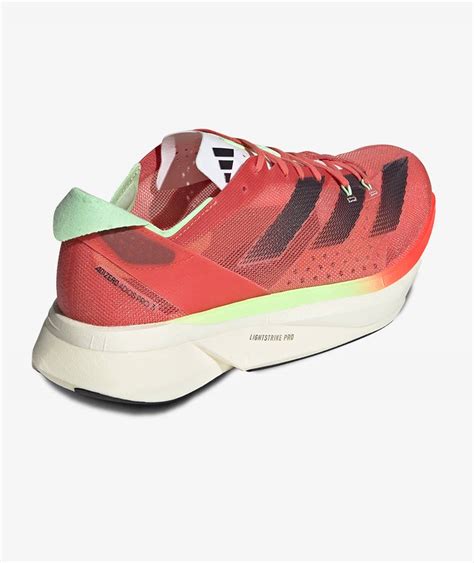
Right out of the box the Adios Pro 3 felt purposeful. The upper is thin and engineered for low weight, with a reinforced area around the toe and medial forefoot that helps lock the foot down during toe-off. What I appreciated immediately was the lacing system: it lets me micro-adjust tension across the midfoot without creating hotspots. I noticed, however, that the heel collar is a bit stiff and needed a couple of runs to break in—initially I had light rubbing on the back of my Achilles during the first two outings.
After a few months the upper began to show scuffing along the medial forefoot, exactly where my gait stresses the shoe most. That abrasion didn't lead to structural failure, but it was a disappointment because I expected the engineered mesh to retain a cleaner look longer. For owners who rotate shoes frequently this may be a minor issue, but for someone who wants a durable race shoe that stays pristine, it's a notable point.
Midsole and ride: How it feels on the road
The midsole is the core reason I picked this shoe and where it mostly shines. In my experience, the Adios Pro 3 gives a firm, propulsive feel that rewards an active stride. I found that the combination of a responsive foam and embedded longitudinal energy elements provides a sense of forward roll—when I push, the shoe pushes back. That sensation is particularly helpful in tempo runs and race pace efforts where maintaining cadence matters.
On short intervals and when I'm running at or faster than 4:00/km pace, I was repeatedly surprised by how efficient each toe-off felt. The shoe encourages a quick transition and helps conserve energy over a race. On the downside, that same firmness makes the Adios Pro 3 less comfortable for slow long runs or recovery days; I noticed my legs felt a bit beat up when I forced an easy run in them. For those slower paces I preferred something with more plushness.
Find top-rated Electronics products at great prices.
Shop Amazon →Stability, plate behavior, and responsiveness
I've been testing carbon-plate and plate-like shoes for years, and the Adios Pro 3 sits in the camp that prioritizes efficient transition over soft landings. The longitudinal energy elements (the ones that run under the forefoot) give a distinct stiffness in the mid-to-forefoot that translates to rapid forward propulsion. In my experience that stiffness felt stable—there were no surprises in lateral movement—but it does reward a midfoot-to-forefoot strike. Heel strikers will not get the same benefit unless they naturally transition forward quickly.
When I ran marathon-pace efforts, the shoe's stiffness kept my cadence higher and encouraged shorter ground contact times. That helped me hold targeted splits with less perceived effort. However, the shoe is unforgiving to sloppy form: if I relaxed and overstrided, I could feel the plate-ish elements resisting, and that made inefficient running more noticeable.
Fit and sizing
I purchased my normal adidas size and found the Adios Pro 3 runs narrow in the midfoot and snug in the forefoot compared to modern wider race shoes introduced later. I noticed this early—the shoe locks the foot in well, but if you have a wider forefoot or like more toe splay, you might need to size up half a size. One thing I appreciated was the tapered yet roomy-toe-box shape that still allowed for toe-off without pinching in the final kilometers of long efforts.
The lacing system allowed me to fine-tune volume: for speed sessions I tightened the midfoot so my foot felt glued to the platform; for long runs I loosened the laces slightly to reduce pressure. The Achilles area did require a few runs to soften, as I mentioned, and I used a thin heel tab under the sock the first two outings to avoid blistering.
Traction and outsole durability
I've used these shoes on wet pavement and dry tarmac. Traction was consistent and confidence-inspiring—no slips on damp asphalt during tempo workouts. The outsole compound is relatively resilient for a high-performance shoe. After the mileage I mentioned earlier, the rubber showed expected wear in the forefoot but no catastrophic breakdown. I was pleasantly surprised that the midsole foam did not suffer obvious compression after several months; the energy return remained, and step-in feel stayed consistent. That said, heavy-mileage users will still see typical midsole compression over a higher threshold of kilometers.
Comfort and irritation points
Comfort-wise, the Adios Pro 3 strikes a balance between performance and tolerable cushioning. I noticed one recurrent irritation: a slight pressure spot across the top of my foot when the laces were cinched extremely tight for racing. It wasn't a blister risk, but it was a reminder that the shoe rewards moderate tightening rather than extreme lockdown. Also, on very hot days the upper breathability was good but not exceptional; my feet did feel warmer during a summer half marathon than they do in minimal mesh trainers.
Shop the latest Electronics picks on Amazon.
Browse Now →Long-term wear observations
After months of use, my biggest tangible signs of aging were surface scuffs on the upper and mild outsole abrasion on the lateral forefoot. Inside, the cushioning held up better than I expected given the shoe’s performance orientation. The propulsive character remained even when the outsole tread began to thin, which tells me the core structure is durable. That durability made me continue using the Adios Pro 3 into races even after visible cosmetic wear appeared.
When I’d wear the Adios Pro 3 (and when I wouldn’t)
- I reach for them on race day for distances from 5K to marathon when I want a responsive, efficient shoe.
- I use them for tempo and threshold runs because the shoe keeps my cadence high and provides consistent feedback.
- I avoid them for easy recovery days and occasional very long slow runs; they make those efforts feel unnecessarily firm.
- I don’t use them on trails or heavily uneven surfaces—this shoe is for roads and well-packed paths.
Pros & Cons
- Pros: Highly responsive midsole and energy elements that still feel lively in 2026; excellent propulsion for tempos and races; surprisingly durable outsole and midsole longevity; secure midfoot lockdown for fast strides.
- Cons: Upper shows early abrasion and is less durable cosmetically; firm ride that’s harsh for easy/recovery runs; narrow fit that may not suit wider-footed runners; initial heel stiffness that needs break-in.
Comparison table: Adizero Adios Pro 3 vs similar race shoes
| Model | Best for | Ride character | Fit notes | Durability / Long-term |
|---|---|---|---|---|
| Adizero Adios Pro 3 | Tempo, races (5K–marathon) | Firm, propulsive, quick transitions | Narrow midfoot, snug forefoot | Good midsole longevity; cosmetic upper wear |
| Nike Alphafly (series) | Marathon, race-day PB attempts | Very springy, higher stack, softer landings | Roomier toe box in some versions | High initial performance; midsole compression varies by model |
| Hoka Carbon X (series) | Long tempo, marathon training | Stable, smoother ride, slightly softer | Generally more forgiving fit | Durable outsole; comfortable for longer training |
| Saucony Endorphin Pro (series) | Races, fast training | Responsive with a snappy forefoot | Moderate width; consistent fit across runs | Good balance of speed and usable lifecycle |
Buying guide: Is the Adios Pro 3 right for you in 2026?
What I recommend based on my experience depends on how you plan to use the shoe and your foot shape.
Who should consider the Adios Pro 3
- Runners who want a responsive, race-focused shoe for tempo work and race day.
- People with a faster turnover and a tendency to transition to the forefoot who can take advantage of the energy elements.
- Runners who rotate shoes and will not use the Adios Pro 3 as their sole daily trainer.
Who should skip it
- Runners who need plush cushioning for recovery days or long slow runs.
- People with very wide feet or bunions—this shoe is on the narrow side.
- Those who prefer minimal break-in; the heel area needs time to soften.
Fit and sizing tips
- Try your usual adidas race size first; if you’re wide in the forefoot, consider half a size up.
- Don’t overtighten the laces; aggressive lockdown increases pressure across the instep and can create hotspots.
- Break them in with a couple of shorter tempo sessions before attempting race distance.
Care and maintenance
- Rotate the Adios Pro 3 with a softer trainer to preserve midsole rebound and reduce wear concentration.
- Clean them after salty winter runs; salt accelerates upper abrasion and outsole breakdown.
- Store them in a cool, dry place—extreme heat can accelerate foam compression over time.
Price and value in 2026
I won't quote current retail links or prices here, but in my view the Adios Pro 3 still offers strong value if you need a race-leaning shoe that can also double as a fast tempo trainer. The long-term value depends a lot on how you use it: if you rotate aggressively and keep mileage reasonable, the shoe's propulsion and durability make it worth the investment. If you expect one shoe to cover everything from recovery miles to race day, you'll be disappointed.
Final thoughts
After several months and hundreds of kilometers, the Adizero Adios Pro 3 remains a shoe I turn to when I want efficiency and speed. What I liked most was how consistently it delivered propulsion across sessions and how the platform stayed lively even after visible cosmetic wear. What bothered me was the upper's tendency to show abrasion, the narrow fit for wider feet, and its unforgiving nature on easy days.
In my experience, if you want a lean, quick, and purpose-built performance shoe in 2026 and you accept the trade-offs—firm ride, fit quirks, and the need for rotation—the Adios Pro 3 is still a very viable option. For everyday comfort and long easy miles, however, it's best supplemented with a softer trainer. I still keep a pair in my rotation and reach for them when the workout calls for speed and precision.