The Truth About the Contour Rollermouse Red Wireless: Pros, Cons, and Verdict
Introduction
The Contour Rollermouse Red Wireless is an offbeat entry in the landscape of pointing devices: a central, hands-forward input device that replaces the conventional mouse with a horizontal rollerbar. Marketed primarily to people seeking reduced wrist travel and improved ergonomics, it has attracted attention from office workers, designers, programmers, and anyone dealing with repetitive strain concerns. This article examines the Rollermouse Red Wireless in depth, evaluating design, ergonomics, performance, real-world suitability, and whether it truly addresses the needs that buyers typically list when researching an ergonomic pointing device.
Product overview and purpose
The Rollermouse Red Wireless reimagines cursor control by placing a scroll and pointer control unit centrally in front of the keyboard. Users operate the rollerbar with the index or middle fingers while the palms rest on a built-in wrist support. The wireless variant aims to combine the ergonomic benefits of the Rollermouse concept with the convenience of a cable-free desk setup.
People who consider this device often care about reducing lateral wrist movement, minimizing extension and pronation, and avoiding the repeated reach that a traditional mouse demands. Buyers typically evaluate: comfort during long sessions, learning curve, compatibility with operating systems and desks, button layout and customization, wireless reliability, and cleaning/maintenance issues. This review addresses each of those points.
Design and build quality
At first glance, the Rollermouse Red Wireless looks like a compact, rectangular console with a rounded rollerbar and an integrated foam wrist rest. The device is low-profile and designed to sit between the keyboard and the user. The housing is a matte plastic with a soft-touch feeling on the wrist rest; the rollerbar itself is metal or hard plastic depending on production batches but has a tactile finish to aid finger traction.
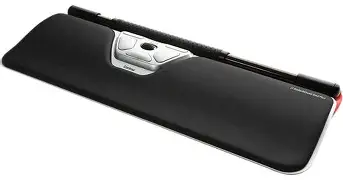
Build quality is generally solid. The foam wrist pad is dense enough to give stable support without bottoming out quickly, and the rollerbar moves smoothly with a slight tactile resistance that helps prevent accidental cursor drift. Buttons are positioned above the rollerbar and along the sides, accessible without lifting the hands from the rest position. For typical office use, the construction feels dependable and durable.
Ergonomics and comfort
This is the Rollermouse’s main selling point. The device promotes a neutral forearm posture by eliminating the need to reach to the side. The wrist rest keeps palms supported and reduces pressure points for many users. For people with mild to moderate wrist or shoulder discomfort caused by frequent reaching, the Rollermouse can reduce strain noticeably.
Real-world users report that the device is especially helpful for:
- Data-entry clerks and administrative staff who move the cursor continuously across spreadsheets.
- Programmers and writers who alternate between keyboard and cursor frequently but want minimal repositioning.
- Designers and CAD users who need smooth vertical/horizontal scrolling and stable cursor control for long sessions.
- Individuals recovering from repetitive strain issues who need to reduce lateral arm movement.
However, ergonomics are subjective. The Rollermouse works best when the keyboard is mounted or placed in front of it so the wrists rest naturally; some compact laptop layouts or improvised desk setups may require adjustments. Taller users or those with very large hands may find the fixed wrist rest geometry less than ideal, and an initial adaptation period of days to a few weeks is common as muscle memory shifts from a side-mounted mouse to a center-mounted rollerbar.
Rollerbar mechanics and pointing performance
The rollerbar is the device’s star feature. It controls the cursor by sliding left and right and functioning as a scroll wheel when pushed or rotated (model-dependent behavior exists). Movement is precise and linear, with low friction and a responsive feel. For precision work, such as selecting small GUI controls or drawing, the Rollermouse can perform well, though it demands a different motor pattern than a hand-held mouse.
Tracking resolution and sensitivity are adequate for most productivity tasks. Gamers or users who demand high polling rates for competitive first-person shooters may find the Rollermouse unsuitable; its strength lies in comfort and continuous control rather than rapid flicks. The Red Wireless model typically offers adjustable pointer speed through system settings or Contour’s software, and the rollerbar’s tactile feedback helps maintain steady control during long operations like scrolling through documents or timelines.
Buttons, shortcuts, and customization
Buttons are arranged along the top and sometimes the sides of the Rollermouse, allowing common functions like left/right click, double click, drag lock, and programmable hotkeys. The drag-lock feature is particularly useful for persistent dragging tasks without continuous pressure.
Looking for the best Laptops & Computers deals on Amazon?
Browse Now →Contour provides software utilities to remap buttons and set pointer acceleration. However, customization depth may not match the most advanced gaming mice or high-end productivity mice. For most buyers—office workers, editors, designers—available customization options are sufficient: key remapping, sensitivity adjustments, and assignment of common functions.
Wireless performance and battery life
The wireless version brings the benefit of fewer cables and a cleaner desk. Wireless performance is generally reliable for daily office use. Contour employs standard wireless protocols (often 2.4 GHz with a small USB receiver) that provide responsive cursor control with minimal latency.
Battery life depends on usage patterns and whether the device has a built-in rechargeable battery or swappable cells (model variations exist). Typical real-world battery life ranges from several days to multiple weeks between charges with average office use. The charging method (USB-C on newer units or micro-USB on older versions) affects convenience; faster charging options reduce downtime. Power-saving modes and automatic sleep when idle help stretch battery life further.
Compatibility and setup
Setup is usually plug-and-play on Windows and macOS. Contour provides drivers and software for both platforms, though macOS feature parity can lag behind Windows. Users who rely on enterprise-managed machines may need IT assistance to install proprietary drivers if customization is required.
The Rollermouse is designed to work with full-sized keyboards and keyboard trays. It can be less straightforward with laptop-only setups where the laptop keyboard is fixed; in those cases, a separate external keyboard is recommended to gain full ergonomic benefit.
Real-world use cases and who should consider it
Understanding how the Rollermouse performs across typical tasks helps potential buyers decide whether to invest time in learning it:
- Office productivity: Excellent for repeated left-right movements and scrolling through documents or spreadsheets; reduces reach and can prevent shoulder strain.
- Programming and writing: Valuable for users who type extensively and need rapid, effortless transitions to cursor control without changing hand position.
- Design and CAD: Useful for certain precision tasks and long sessions, though some designers prefer a pen tablet for freehand drawing and detailed illustration.
- Gaming: Not ideal for fast-paced or high-sensitivity gaming where rapid flicks and very high DPI are important. Suitable for slower-paced or strategy games that prioritize comfort.
- Rehabilitation/RSI prevention: Many ergonomists recommend central devices like the Rollermouse for users with repetitive strain symptoms, but clinical advice should be sought for severe conditions.
Cleaning and maintenance
Because users rest their palms and move fingers over the rollerbar, daily cleaning and occasional deep cleaning will extend the device’s life and keep performance consistent. The rollerbar can gather skin oils and dust; wiping with a soft cloth and isopropyl alcohol (following manufacturer guidance) is effective. The foam wrist pad may wear over years and can sometimes be replaced depending on availability of spare parts.
Durability, warranty, and long-term considerations
Contour generally backs its products with a limited warranty. Long-term durability is tied to the roller mechanism and the foam wrist pad. Users who put the device through heavy daily use should monitor wear on the pad and the rollerbar movement. The wireless receiver’s lifespan is typically long, but misplacement of the tiny dongle is a common complaint; keeping it attached to a keyboard or a USB extender helps avoid loss.
Comparison table
| Feature | Contour Rollermouse Red Wireless | Contour Rollermouse Red (Wired) | Traditional Side Mouse |
|---|---|---|---|
| Primary ergonomics | Central wrist support, minimal lateral reach | Same central ergonomics, constant power | Side-mounted; requires reach and wrist rotation |
| Portability | Moderate; wireless convenience, larger footprint than thumb mice | Lower; requires cable and space for placement | High; small footprint and easy to transport |
| Precision for design/gaming | Good for design; not optimized for competitive gaming | Good for design; slightly better consistency due to wired connection | Varies widely by model; high-performance gaming mice available |
| Setup simplicity | Plug-and-play; driver available for customization | Plug-and-play; immediate operation | Plug-and-play; widely supported |
| Battery / Power | Rechargeable or replaceable batteries; needs charging | No battery; powered by USB | No battery (wired) or long battery life (wireless) |
| Learning curve | Moderate; users usually adapt in days to weeks | Moderate; same adaptation | Low; familiar interaction model |
Pros & Cons
Pros
- Ergonomics: Reduces lateral reach and can lower shoulder and wrist strain for many users.
- Central positioning: Keeps hands in the typing zone, speeding transitions between keyboard and pointer.
- Built-in wrist support: Stable palm support reduces pressure points.
- Rollerbar control: Smooth, precise scrolling and cursor control for long sessions.
- Wireless convenience: Eliminates cable clutter and enables a cleaner desk setup.
Cons
- Learning curve: Requires an adaptation period; muscle memory must shift from lateral mouse movements to central finger motions.
- Not optimal for competitive gaming: Lacks the high-frequency polling and quick flick responsiveness some gamers require.
- Desk footprint: Occupies space directly in front of the keyboard; not ideal for very small desks without adjustments.
- Hand size and comfort variance: Fixed wrist pad geometry may not suit all hand sizes equally.
- Battery dependence (wireless): Needs charging or battery changes; forgetting to charge can cause interruption.
Buying guide: How to decide if the Rollermouse Red Wireless is right
When evaluating the Rollermouse Red Wireless, consider these practical points that buyers commonly weigh:
1. Primary use case
If the bulk of work involves heavy typing, frequent small pointer movements, or long periods of scrolling, the Rollermouse can improve comfort and efficiency. For fast-action gaming, a traditional high-DPI gaming mouse will likely perform better.
Looking for the best Laptops & Computers deals on Amazon?
View Offers →2. Desk layout and keyboard setup
The Rollermouse requires a setup where the keyboard can sit behind the device so wrists rest comfortably. If using a laptop without an external keyboard, the ergonomic benefits are reduced. Users with keyboard trays or adjustable desks will find integration easier.
3. Dominant hand vs ambidexterity
The Rollermouse is effectively ambidextrous and designed for central operation, which is an advantage for those who switch hands or want a single device for both hands. There is no need to choose left- or right-handed variants.
4. Physical discomfort or injury
For buyers with early-stage repetitive strain concerns, the Rollermouse can be a useful preventative tool. Those with diagnosed conditions should consult an occupational therapist or physician for tailored advice.
5. Customization needs
Consider whether the Contour software offers the level of button remapping and sensitivity control required. If deep macro support is essential, verify software capabilities before purchasing.
6. Trial and returns
Because adaptation varies, purchasing from a retailer with a reasonable return policy helps mitigate the risk of incompatibility with personal comfort. Testing for at least a week under typical workloads gives a fair assessment of whether the device improves ergonomics and productivity.
7. Maintenance and spares
Check the availability of replacement wrist pads or rollerbar service options if heavy daily use is anticipated. A straightforward cleaning routine should be part of the purchase decision.
Conclusion
The Contour Rollermouse Red Wireless is a strong ergonomic alternative to the conventional mouse for people whose primary concerns are wrist extension, lateral reach, and the cumulative strain of frequent keyboard-to-mouse transitions. It excels in office and productivity contexts, where steady cursor control and comfortable hand positioning translate to tangible benefits over an eight-hour workday.
However, it is not a universal solution. The learning curve, desk footprint, and limited suitability for high-performance gaming mean it is best suited for those focused on comfort and repetitive productivity tasks rather than competitive play. Buyers should weigh their desk layout, whether they can accommodate a central device, and whether they are willing to spend a week or two adapting.
For users seeking to reduce repetitive strain and improve a long-term workstation setup, the Rollermouse Red Wireless is worth strong consideration. It offers a meaningful ergonomic change with reliable wireless performance and practical features for daily use. As with any ergonomic tool, individual results vary; the safest approach is to test it in the context of the specific work environment and tasks to see if the benefits materialize for that person’s workflow.